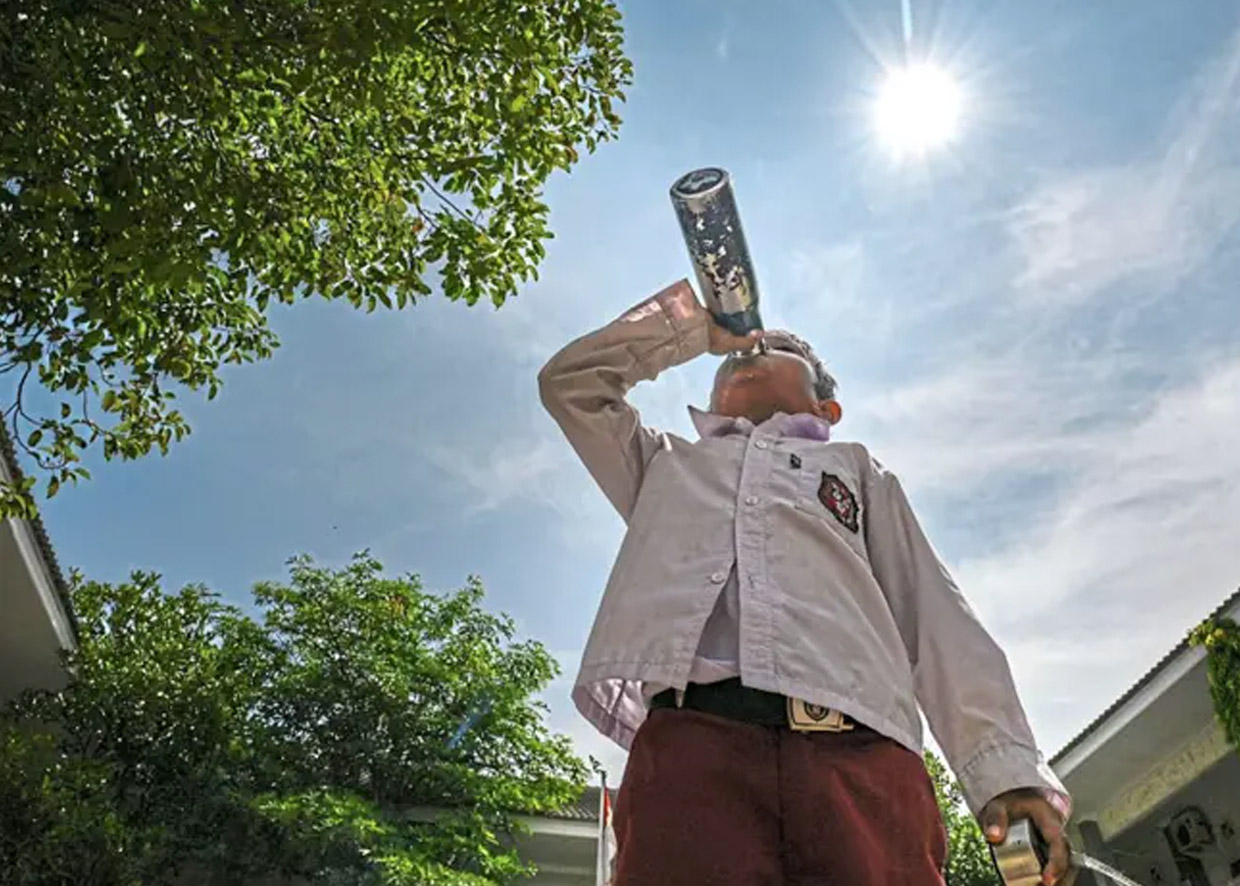
Recent years have seen record-breaking heatwaves in regions once considered temperate, including severe heat across Europe, Asia, Africa and North America.
Heatwaves, often less visible than other natural disasters, have become a critical public health concern. In Malaysia, rising temperatures and humidity from climate change heighten the risk of heat-related illnesses, particularly heat exhaustion and heatstroke.
In 2023 and 2024, temperatures exceeded 37°C in multiple states, with significant cases of heatstroke reported by the Health Ministry during the March–May 2023 heatwave. The April 2023 heatwave was notably severe in South-East Asia, with Vietnam reaching 44.2°C and Bangkok exceeding 40°C for consecutive days. In May, the highest temperature recorded in Malaysia was 39.5°C in Chuping, Perlis.
Northern inland areas like Perlis and Kedah frequently experience the hottest temperatures during heatwaves. Heatstroke is a medical emergency characterised by high body temperature and confusion, potentially leading to seizures or unconsciousness.
As climate change intensifies heatwaves, prevention strategies such as staying hydrated, seeking shade and monitoring vulnerable populations are essential to save lives. This column examines the link between climate change and heatwaves, the associated health risks, and strategies for prevention and protection.
What is a heatwave?
A heatwave is typically an extended period of excessively high temperatures, often accompanied by elevated humidity levels, persisting for days or even weeks. While definitions may vary across different regions, a heatwave generally signifies temperatures that substantially exceed the historical averages for a specific location.
Heatwaves possess a deceptive nature, unfolding gradually and impacting individuals silently. Unlike more overt disasters, such as storms or floods, their effects can be insidious yet profoundly damaging.
Prolonged exposure to extreme heat can hinder the body’s ability to maintain its normal temperature, placing immense pressure on healthcare systems, exacerbating pre-existing health conditions and increasing the risk of death.
The phenomenon of climate change, primarily driven by the accumulation of greenhouse gases, is significantly amplifying the frequency and intensity of heatwaves. Research indicates that global temperatures have escalated by over 1.1°C since the pre-industrial era, resulting in an increased incidence of extreme heat days.
Modern heatwaves also last longer than historical averages, affect regions previously characterised by milder climates, and are of escalating intensity, with record high temperatures becoming increasingly common.
Urban areas are particularly susceptible to heatwaves due to the urban heat island effect, where concrete, asphalt and a scarcity of greenery trap heat.
Our response to heat
The human body typically maintains a stable internal temperature of approximately 37°C through processes like sweating and blood circulation. However, during extreme heat conditions, especially with high humidity, these mechanisms may falter. This can result in heat exhaustion and heatstroke.
Heat exhaustion is a less severe heat-related illness marked by symptoms such as heavy sweating, weakness, dizziness, nausea and muscle cramps. Heatstroke is a life-threatening emergency that occurs when body temperature exceeds 40°C, potentially leading to confusion or agitation, seizures, loss of consciousness and organ failure.
Other symptoms include skin that is hot and red, which may either be dry or overly sweaty; increased heart rate; rapid breathing; nausea and vomiting. Without prompt medical intervention, heatstroke can be fatal. The adverse health impacts of heatwaves are not uniformly distributed.
Certain demographics face heightened vulnerability, such as:
- Senior citizens
- Infants and young children
- Individuals with chronic conditions such as cardiovascular (heart) diseases, diabetes or respiratory issues.
- Outdoor workers, especially in sectors like construction, agriculture or delivery.
- Low-income communities, who often lack access to adequate cooling resources.
In addition, the urban heat island effect exacerbates the risk of heat-related illnesses among urban dwellers compared to their rural counterparts.
Global health repercussions
The years 2024 and 2025 witnessed unprecedented heatwaves, fuelled by climate change and the El Niño phenomenon.
The year 2024 has been recorded as the hottest year to date, surpassing critical wet-bulb temperature thresholds. Around 489,000 to 500,000 deaths globally were estimated to be related to heat that year.
Heat stress can also intensify the severity of various health conditions, including:
- Cardiovascular diseases – due to increased strain on heart function.
- Respiratory illnesses – due to elevated air pollution levels during heat events.
- Kidney diseases – due to complications arising from dehydration.
- Occupational heat stress – especially among outdoor labourers in South-East Asia and the Gulf States.
- Mental health disorders – such as heightened irritability, anxiety and sleep disturbances due to extreme temperatures.
Heatwaves disrupt daily life and economic productivity in numerous ways. It can result in reduced capacity for outdoor labour, increased demand on electrical grids due to air conditioning usage, agricultural losses from withering crops, and rising healthcare costs associated with heat-related ailments.
Anticipating future risks
The World Health Organization (WHO) has issued stark warnings that if current trends persist, heat-related deaths could surge dramatically by 2050. By mid-century, billions may face life-threatening heatwaves annually, particularly in equatorial regions.
How can we tackle this?
Strategies for prevention and protection on an individual level include:
- Staying hydrated – we need to regularly consume water, even when we are not feeling thirsty.
- Seeking shade and cooling – limit sun exposure during the peak sunlight hours of 10am to 4pm.
- Wear suitable clothing – opt for light-coloured, loose-fitting attire to facilitate cooling.
- Utilise fans or air conditioning – if unavailable at home, visit public places that have them.
- Check on vulnerable individuals – regularly monitor the well-being of the elderly, children and those with chronic health issues.
Learning first aid for heatstroke can also be life-saving. The steps are:
- Call the emergency services without delay.
- Relocate the individual to a shaded or air-conditioned environment.
- Remove excess clothing to facilitate cooling.
- Cool the body quickly by applying ice packs to key areas (neck, armpits, groin), spraying the person with cool water or immersing them in a cold bath if available.
- Do avoid giving fluids if the person is unconscious.
On a community and national level, initiatives can include:
- Public education campaigns – to enhance awareness of heat safety practices.
- Heat action plans – cities like Ahmedabad in India have implemented proactive measures and early warning systems, resulting in reduced heat-related deaths.
- Healthcare preparedness – training medical personnel to quickly recognise and treat heatstroke cases.
- Urban planning – creating more green spaces, reflective rooftops and shaded public areas to mitigate urban heat.
- Sustainable cooling solutions – expanding access to affordable and energy-efficient cooling options.
- Establishment of cooling centres – these are facilities run by the government or non-governmental organisations (NGOs) that would provide refuge during extreme heat.
- Global climate initiatives – addressing greenhouse gas emissions, which is critical for mitigating extreme heat events.
Cultivating resilience now
Heatwaves and heat-related illnesses are being increasingly recognised as predictable public health emergencies in a warming world. The undeniable link between climate change and extreme heat has far-reaching implications, affecting not only physical health, but also social, economic and environmental stability.
The forecasts for 2025 show that death rates are expected to rise by approximately 10–15% if no interventions are implemented. And long-term projections suggest that annual deaths could surpass one million by 2050 if current trends persist.
Urban megacities in particular, are predicted to see significant increases in health-related impacts. Awareness, proactive preparedness and adaptation strategies are crucial for alleviating the burden of heat-related health issues.
Collectively, as individuals, communities and nations, we must acknowledge the escalating threat of extreme heat and take decisive actions to safeguard lives, enhance resilience and confront the underlying causes of climate change.
By Datuk Dr Nor Ashikin Mokhtar
Published in Star Newspaper, 25 Aug 2025